
November 8, 2026
Rosemary, Castor, Jojoba: Which Oils Work in a Scalp Oil Applicator?
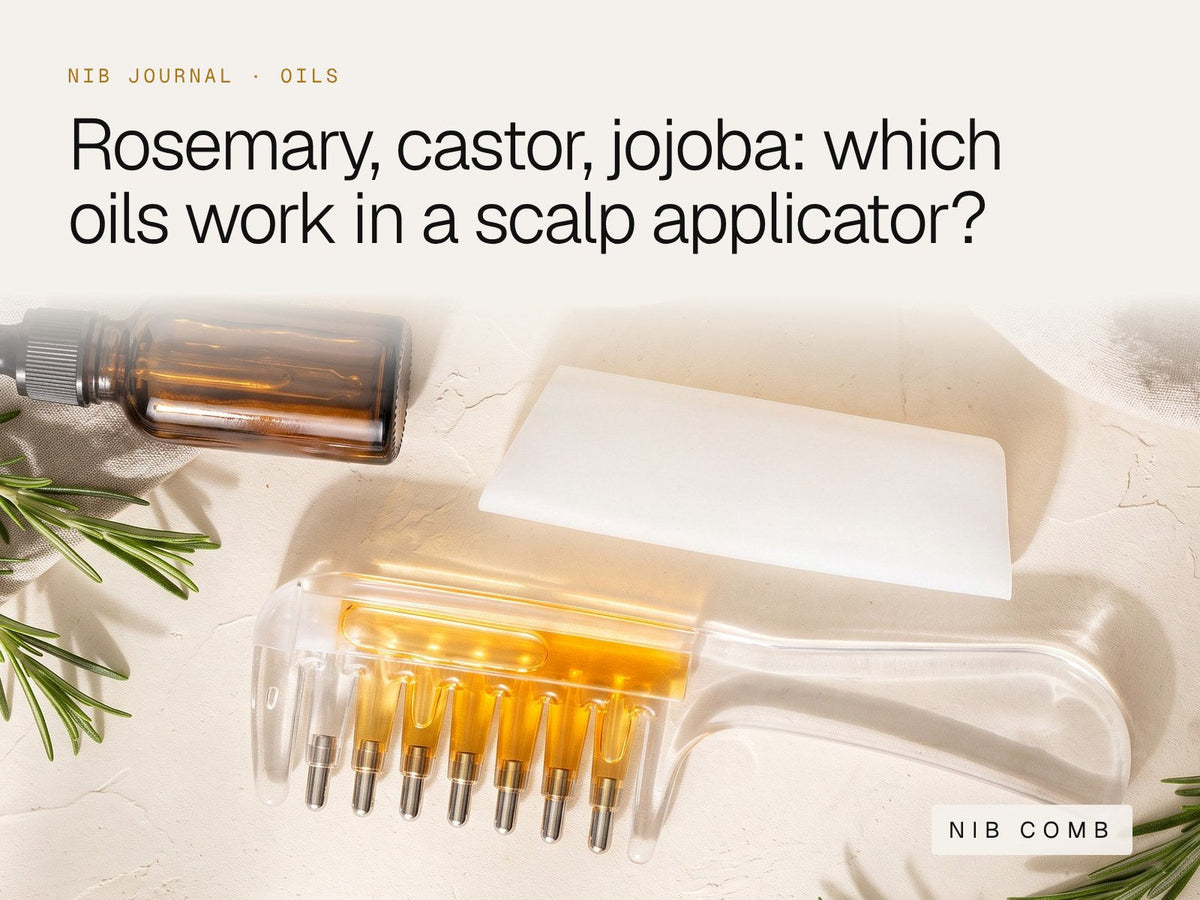
The short answer: almost anything that pours. Rosemary blends, jojoba, argan, amla, coconut (melted), castor, scalp serums and the blend your family has made for generations all work in a scalp oil applicator.
The longer answer is about thickness. Thin oils flow quickly through the tips. Thick oils flow slowly, and need a little help. This guide sorts the common ones and explains what to do with each.
A note before we start: this is about how oils behave in an applicator, not what they do for your hair. For that, follow the guidance on your oil and talk to a professional if you have a scalp condition.
Thin oils: fill and go
These flow easily and give you the most even lines.
- Jojoba. Light, clear, and one of the easiest to work with. A good base for blends.
- Argan. Light and smooth. Flows freely.
- Sweet almond and grapeseed. Light carrier oils that move through the tips without effort.
- Most scalp serums. Usually water-thin. Check the label for anything that should not be stored in a container between uses.
Medium oils: easy, with a slower glide
- Rosemary oil blends. Most ready-made rosemary hair oils are rosemary in a carrier oil, so they behave like the carrier. Pure rosemary essential oil is strong and is normally diluted before it goes anywhere near skin; follow the bottle's directions.
- Amla oil. Usually sold in a light carrier and flows well.
- Olive oil. A little heavier than jojoba. Draw the comb a touch more slowly.
Thick oils: warm or blend first
- Castor oil. The thickest common hair oil. Straight from a cold bottle it moves slowly. Warm the bottle in your hands or in a bowl of warm water for a minute, or blend it with a lighter oil like jojoba (half and half is a good start).
- Coconut oil. Solid below about 24°C (76°F). Melt it gently first, and use it in a warm room, or it will set in the tips.
- Batana and other butters. Too thick for an applicator unless thinned with a light oil.

How to fill an applicator without spills
- Stand the comb upright on a towel or the sink edge.
- Use a dropper (the NIB COMB includes one) to add about 4 ml to the reservoir.
- Don't overfill. Leave a little air at the top.
- Cap it. With the silicone sleeve on, the reservoir stays sealed until you are ready.
Blends worth trying
- Light everyday: jojoba on its own, or jojoba with a few drops of a ready-made rosemary blend.
- Richer weekly: half castor, half jojoba, warmed.
- Family recipe: whatever you grew up with. If it is thick, thin it a little with a light oil so it flows.
Cleaning between oils
Switching oils? Rinse the tips and reservoir with warm water, add a drop of dish soap, swirl and rinse well. Our cleaning guide covers it step by step.
Still unsure about your oil? Read the FAQ or email info@nibcomb.com and tell us what you use.