
November 8, 2026
Fingers, Dropper, Squeeze Bottle or Comb? Scalp Oil Methods Compared
There are four common ways to put oil on your scalp. All of them work, in the sense that some oil reaches skin. They differ in how much reaches it, how much ends up elsewhere, and how long the cleanup takes.
At a glance
| Method | Where the oil goes | Control | Cleanup | Cost |
|---|---|---|---|---|
| Fingers | Hands and hair lengths first, some scalp | Low | Wash hands, wipe everything you touched | Free |
| Dropper bottle | Scalp, then forehead and neck as it runs | Medium per drop, slow overall | Wipe drips | Comes with many oils |
| Applicator squeeze bottle | Scalp, often too much in one place | Hard to meter | Rinse the nozzle | Low |
| Oil applicator comb | Along the part line, where the tips touch skin | High | Rinse the tips | Higher upfront, reusable |
Fingers
Good for: a quick massage with a few drops, when you are not worried about where the rest goes.
The problem: oil coats your hands before anything else, and your hands touch hair before skin. A lot of the oil ends up on the lengths, which is why finger oiling often leaves roots greasy and the scalp underneath barely touched. Then there is everything you touch afterwards: your phone, the tap, the fridge door.
Dropper bottle
Good for: precise, single drops on a small area.
The problem: covering a whole scalp one drop at a time is slow, and oil runs. Tilt your head and it heads for your forehead or the back of your neck.
Applicator squeeze bottle
Good for: getting oil to the roots quickly, especially with thick hair or braids.
The problem: it is hard to squeeze evenly. You get too much in one spot and too little in the next, and most people use far more oil than they need.
Oil applicator comb
Good for: even, controlled lines along each part, with clean hands.
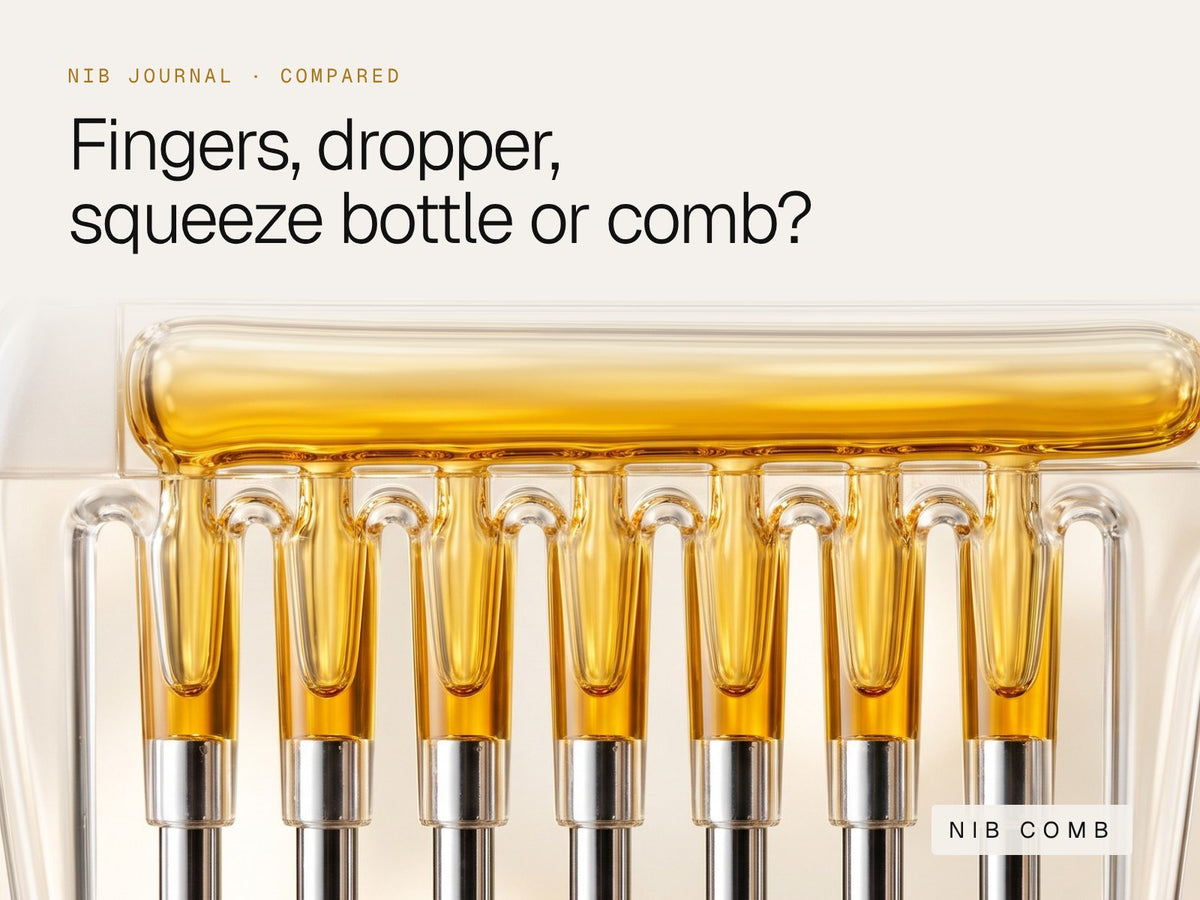
How it works: a reservoir holds the oil and the tips release it when they touch the scalp. You draw the comb along a part and it lays a thin line, then you move a finger-width over and repeat. The NIB COMB holds about 4 ml and has seven metal tips, so each pass lays seven thin lines side by side.
The trade-off: it costs more upfront than a bottle, thick oils need warming or blending to flow well, and the tips need a rinse after use.

Which should you choose?
- Oil occasionally and don't mind washing your hands: fingers are fine.
- Treat a small spot: a dropper is the most precise.
- Have braids or locs and want speed: a squeeze bottle with a nozzle reaches between them.
- Oil your whole scalp regularly and want clean hands, even coverage and less waste: an applicator comb.
Whichever you use, the technique that matters most is the same: part the hair and put the oil on the skin, not the hair. Our step-by-step guide walks through it.